
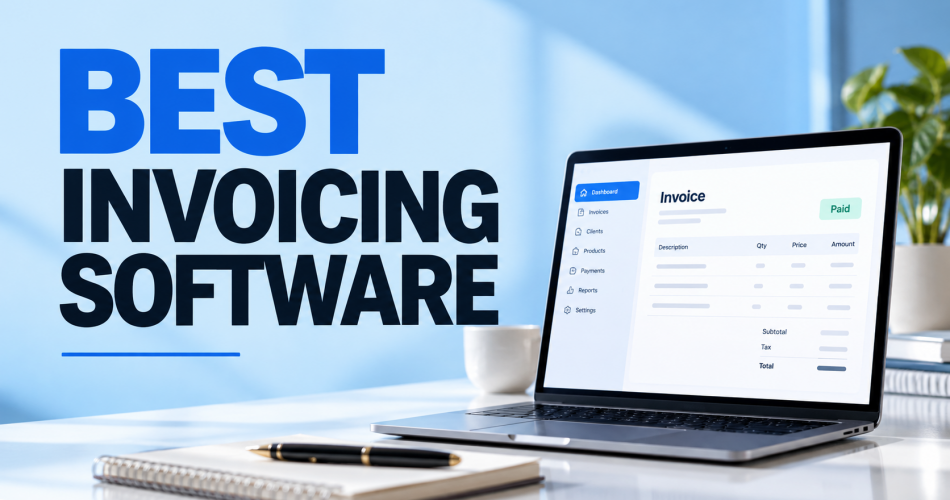
You know that moment when you type your business name and account number into WhatsApp for the fifth time this week, hoping the client actually sees it before they forget? That was fine when you had two clients.
It stops being fine the moment your business starts growing, and somehow that is exactly when most Nigerian business owners realize they never actually sat down to think about invoicing software.
Here is the thing though. A lot of the advice floating around online about the best invoicing software for small businesses in Nigeria is outdated, sometimes badly.
People are still recommending tools that quietly stopped working for Nigerians years ago, and if you go by that advice, you will waste time setting up something that either does not accept your money properly or does not exist here anymore. So let’s fix that.
This is a proper, current guide on what to actually look for when choosing the best invoicing software for small businesses in Nigeria in 2026, why some of the old favorites do not cut it anymore, and what good invoicing actually looks like when it is done right.
What to Look For in Invoicing Software for a Small Business in Nigeria
Before comparing anything, you need to know what you are even comparing against. A lot of small business owners pick invoicing software the way they pick a phone case, whatever looks nice or whatever a friend mentioned once. That works out fine sometimes and badly other times.
Here is what genuinely matters when you are choosing invoicing software for a small business in Nigeria:
1. Naira support that actually works properly: Not an afterthought currency option buried in settings, but something built around how Nigerian businesses actually price and bill.
2. Local payment integration: Your client should be able to pay you through a method they already use and trust, whether that is a bank transfer, USSD, or card, without you having to explain a foreign payment system to them.
3. Automated reminders: If you are still manually messaging clients to ask if they have paid, you are doing unpaid admin work that software should be handling for you.
4. Straightforward pricing: Some tools look free until you actually need the features you need, and then suddenl
5. Simplicity: If it takes you twenty minutes to figure out how to send one invoice, that tool has already failed its one job.
Keep these five in mind as we go, because they are the real test for the best invoicing software for small businesses in Nigeria, not flashy features you will never touch. And this is where invoice.ng comes in. It is a Nigerian invoicing app built for Nigerians and for a global audience.
Also Read: How to Write an Invoice in Nigeria (Step-by-Step Guide for Small Businesses and Freelancers)
Why Some Popular Recommendations No Longer Hold Up
Here is where a lot of “best invoicing tools” articles online get it wrong, and it is worth calling out directly. Wave used to be a name that came up constantly in these lists. It was free, it looked clean, and plenty of Nigerian freelancers used it for years.
Except Wave exited the African market entirely and stopped accepting new Nigerian accounts. So if you are reading a blog post from three years ago recommending Wave for Nigerian small businesses, that advice simply does not apply anymore, and you would be signing up for something you cannot actually access.
PayPal has a similar problem, though for a different reason. It is technically still usable, but only in one direction. You can send money out through PayPal, but pulling money into a Nigerian bank account is a whole separate headache.
The funds usually have to pass through an intermediary service first, and depending on which one you use, you could lose close to a third of the payment just in fees and conversion costs. For a small business already working with thin margins, that is not a minor inconvenience, that is money walking out the door for no good reason.
This matters because a huge chunk of small business owners in Nigeria are still following advice built for a market that no longer exists.
When you are genuinely looking for the best invoicing software for small businesses in Nigeria right now, cross off anything that was built for a global audience first and squeezed into local relevance as an afterthought.
Also Read: How to Use AI to Write Professional Invoices in Nigeria
What the Best Invoicing Software for Small Businesses in Nigeria Looks Like
So what does the real answer look like, the one that actually fits how Nigerian small businesses operate day to day?
It looks like software built with Nigeria as the starting point, not an edge case. Something where you can go to the website, create an invoice in naira without doing any mental currency conversion, and send it straight to your client through a link they can pay with their bank app, USSD code, or card in a couple of taps.
It looks like reminders that go out on their own so you are not the one sending that slightly awkward “just following up” message every few days. It looks like a dashboard where you can glance at your business and immediately know who has paid, who hasn’t, and how much is sitting out there waiting to come in.
This is genuinely the gap Invoice.ng was built to close. It handles naira invoicing without the extra steps, connects with local payment options Nigerian clients already know how to use, and takes the manual chasing out of your hands with automatic reminders.
You are not adapting your business to fit a tool designed somewhere else. The tool was designed around how business actually gets done here.
Free Versus Paid, and What Is Worth Paying For
A question that comes up constantly is whether free invoicing tools are enough, or whether paying for something upgraded actually changes anything meaningful.
Honestly, if you are sending a handful of invoices a month and your client list is small, a solid free tier will carry you fine. The real shift happens once your invoice volume grows, once you have more than a few clients on repeat billing, or once chasing payments manually starts eating into hours you could be spending on actual work.
That is usually the point where paying for a few extra features earns itself back quickly. Automated recurring invoices for repeat clients, more detailed reports on what is owed versus what has come in, and reminder sequences that run without you lifting a finger, these are the things that start to matter once your business has outgrown doing everything by hand.
The moment invoicing starts costing you real time instead of just a few minutes, that is your signal to stop asking whether to pay and start asking what you actually need.
The Real Reason So Many Small Businesses Get Invoicing Wrong
This is the part that does not get talked about enough. It is rarely about picking the wrong software entirely. It is usually smaller decisions that quietly build up into a mess.
A business owner sets up an account, sends one invoice, and then goes right back to typing account numbers into WhatsApp because it feels faster at the moment. Someone picks a tool because a friend mentioned it once, without checking whether it actually supports local payments properly. Another business owner keeps using a free plan long after their invoice volume has outgrown it, wondering why tracking payments still feels chaotic.
None of these are dramatic mistakes. They are just habits that never got questioned. If any of them sound familiar, that alone is worth pausing on, because the fix is usually smaller than people expect. It is rarely about switching everything at once. It is about actually using the tool properly instead of falling back into old habits the moment things get busy.
Final Thought
If you are trying to figure out the best invoicing software for small businesses in Nigeria in 2026, the answer is simpler than the endless comparison lists make it seem. Skip anything still being recommended from outdated advice, since tools like Wave are no longer usable here and options like PayPal come with fees that quietly eat into your earnings. Look instead for something built around naira, local payments, and automatic follow-ups from day one.
Invoice.ng was built specifically to check those boxes for Nigerian small businesses and freelancers, so you can spend less time chasing payments and more time actually running your business. Set it up once, get comfortable with it, and let it handle the part of your business that used to eat up your evenings.